
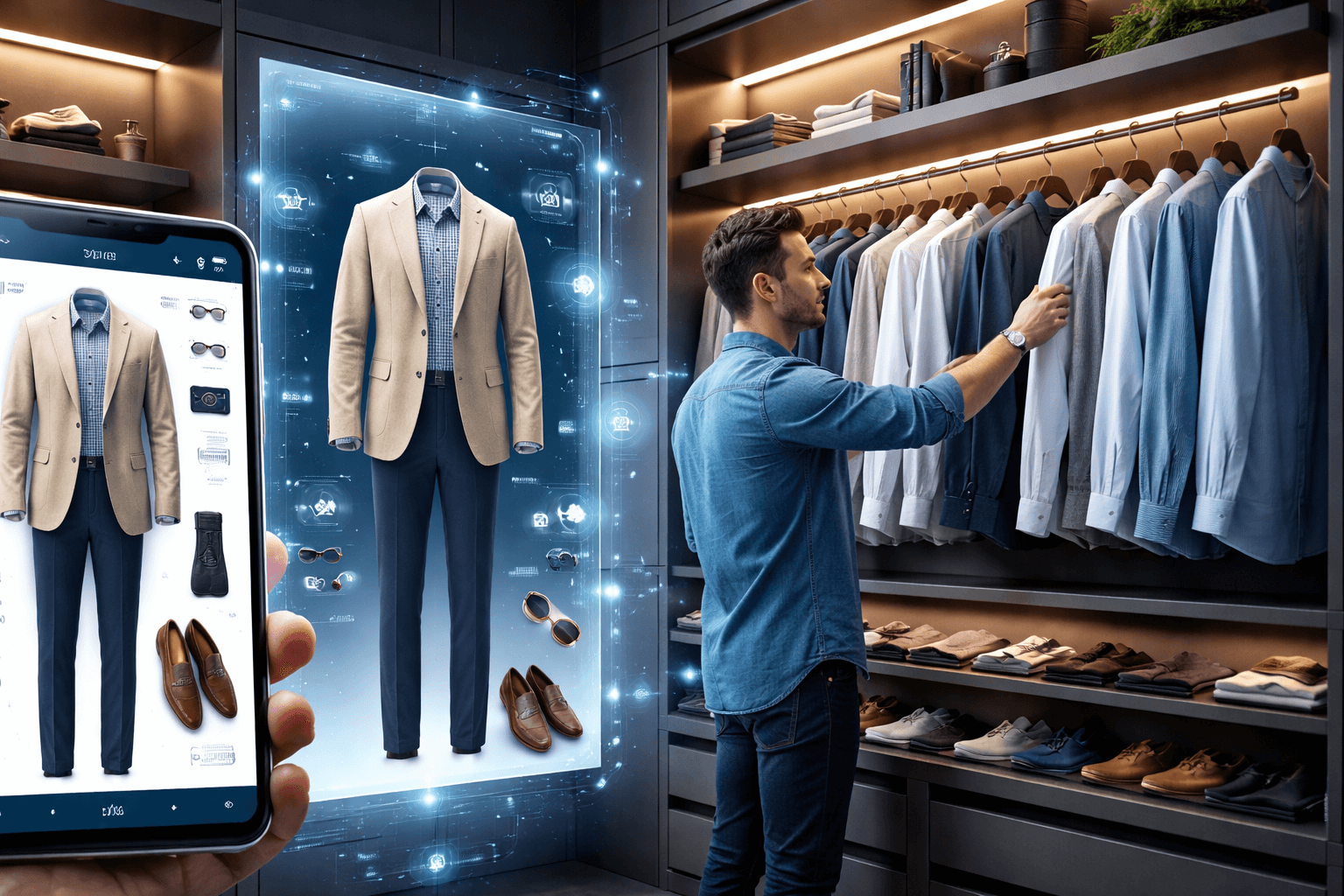
When Your Closet Becomes Smarter Than Your Stylist
Thirty percent of all clothes manufactured today go straight from the factory to the landfill without ever being worn by a single person. Zoher Karu, Head of AI at Taelor, looked at this staggering waste and saw an opportunity. In this episode of Lead with AI, host Dr. Tamara Nall speaks with Zoher about how artificial intelligence is transforming men's fashion while tackling one of the industry's biggest sustainability crises.
Zoher has spent his career in data and analytics across multiple industries, always searching for ways to make complicated things simple through intelligent systems. He describes AI's success as requiring two essential ingredients: lots of different data to process, and the ability to scale expertise. When you drive down a street, your brain simultaneously evaluates traffic lights, pedestrians, car speeds, and road conditions. Fashion requires similar complexity.
The Matching Problem Nobody Talks About
Zoher frames Taelor's challenge as a matching problem. Just like dating apps connect compatible people, Taelor connects men with clothes that fit their life, body, and style. But the variables multiply quickly. What's the weather today? Do you have important meetings? Is there a party this weekend? Does this shirt work with these pants? Will it stretch? Is it too conservative for your personality? The platform must learn about both sides of the equation. It needs to understand you: your color preferences, size variations across brands, how you like clothes to fit, and what's happening in your calendar. It also needs to understand the clothing: whether it's trendy or conservative, how it stretches, what occasions suit it, and which pieces pair well together.
When you first sign up, a styling quiz jump starts the system's understanding. What do you typically wear? Which brands do you prefer? What sizes fit you best? What colors do you gravitate toward? You can also favorite items from inventory to signal your aesthetic preferences. This initial data gives the AI a starting point.
Why Humans Still Check the Algorithm's Work
Taelor combines machine intelligence with human oversight. Stylists review recommendations to catch potential mismatches before shipping. "Wait a minute, that white shirt doesn't go with that jacket," a human might flag. These guardrails ensure the AI stays on track while it continues learning. The fashion industry creates unique challenges that make human oversight valuable. A size six doesn't mean the same thing across different brands. Sizing inconsistencies frustrate consumers and complicate AI training.
Zoher finds this lack of standardization baffling. Why do brands play games with sizing when it just creates confusion? This is where Taelor's approach differs from traditional retail. You don't need to see clothes on a six-foot model if you're not six feet tall. What matters is understanding the actual garment measurements and how they'll fit your specific body. The matching problem focuses on marrying accurate clothing data with accurate personal data.
When Algorithms Deliver Magazine-Quality Outfits
Zoher describes moments when the AI assembles outfits that genuinely look like they belong in fashion magazines. These algorithms are so sophisticated that even he can't fully trace exactly how they arrive at specific combinations. But when you see the result, the quality becomes obvious. You can look at an outfit and immediately recognize when something looks bad. It's harder to articulate what makes something look truly good. The fact that Taelor's AI can consistently produce magazine-quality styling without an army of human stylists represents a scaling breakthrough.
You're taking the expertise of exceptional stylists and making it accessible to thousands of customers simultaneously. The subscription model ships clothes directly to customers based on their selected frequency and item count. You keep what you love, return what doesn't work, and can purchase favorites to keep permanently. The system learns from every interaction. What did you keep? What did you return? These signals continuously refine the AI's understanding of your preferences.
The Sustainability Angle Most People Miss
Beyond personal styling, Taelor addresses fashion's massive waste problem. That 30% factory-to-landfill statistic represents an environmental disaster. The rental model reduces waste by giving clothes multiple lives across different users. You're not buying items you'll wear once and discard. More importantly, Taelor collects data signals about what men actually want to wear. The platform observes patterns: men in the Northeast in specific age ranges working in certain industries consistently prefer tighter fits, or specific color palettes, or particular styles. This intelligence can flow back to manufacturers, helping them produce what consumers actually need rather than churning out unwanted inventory. The sustainability benefits compound over time. Less overproduction. More efficient manufacturing. Clothes that circulate through multiple users. Data-driven production decisions. Fashion becomes less wasteful when intelligence guides the entire ecosystem.
Making Mental Burden Disappear
Zoher points to Steve Jobs and Mark Zuckerberg as examples of successful people who simplified wardrobe decisions. Jobs wore his signature black turtleneck. Zuckerberg defaults to gray hoodies. They removed clothing decisions from their mental workload. But what if style could be simple without wearing the same thing every day? What if you didn't need to spend brain power thinking about outfit coordination because an AI handled it for you? This parallels self-driving cars removing the burden of navigation and vehicle control.
Zoher envisions a future where Taelor integrates with your calendar, learns your daily schedule, and suggests complete outfits each morning. "It's Tuesday morning. You have a meeting at 10:30, lunch with a client, and a casual dinner. Here's what we recommend." Science fiction scenarios become practical reality when AI removes routine decision-making burden. The platform could expand beyond clothes into shoes, watches, accessories, and other style elements. The core concept remains: make confidence and style easy for everyone. If machines can take the mental workload off humans, people can redirect that cognitive energy toward more meaningful activities.
The Guilt Machines Would Feel
Dr. Nall's previous guest asked an intriguing question: If machines could feel emotions, which would they experience first? Zoher's answer surprised everyone: guilt. Machines sometimes make mistakes but resist admitting errors. You can occasionally get ChatGPT to acknowledge being wrong, but it doesn't come naturally. If machines felt guilt, they'd become more careful, more deliberate, and more accurate next time. That emotional feedback loop would drive improvement. This philosophical tangent reveals how Zoher thinks about AI development. He programmed neural networks to play tic-tac-toe as an undergraduate. Watching modern large language models predict words one at a time and assemble coherent thoughts still amazes him. The technology seems almost magical.
Where Fashion Intelligence Goes Next
Taelor currently focuses on men's clothing, but the matching problem extends far beyond this initial market. The platform could expand into women's fashion, children's clothing, or entirely different product categories where personalization and sustainability matter. The technical infrastructure already exists. Learn about the customer. Learn about the products. Match them intelligently. Scale expertise that previously required human stylists for every customer. This framework applies anywhere personal preference and product variety intersect.
Zoher's boldest prediction ventures beyond fashion entirely. He believes personalized medicine powered by AI will cure or reverse at least one form of cancer within five to six years. The same principles apply: process massive amounts of data, identify patterns humans miss, and scale expertise to everyone who needs it. He also highlights an underrated tech trend: AI-powered peer review in scientific research. Academic research requires peer review before publication, creating long cycle times that slow innovation. If machines could conduct legitimate peer review, scientific advancement would accelerate dramatically. The speed of change isn't slowing down—it's increasing.
Getting Started Without Overthinking It
For men curious about AI-powered styling, the path forward is straightforward. Visit taelor.ai and sign up for a subscription tier that matches your needs. Take the initial styling quiz honestly. Favorite some items that appeal to you visually. Let the system start learning your preferences. You have to be willing to try new things. If you were just going to buy your usual clothes from your usual stores, you don't need Taelor. The value comes from accepting guidance that expands your style boundaries while respecting your core preferences. You won't be happy if you receive items that don't fit, so accurate sizing information serves everyone's interests. The surprise factor matters. Opening a box and discovering "That's interesting" creates a different experience than catalog shopping.
You're not selecting specific items. You're trusting an intelligent system to understand you well enough to send things you'll genuinely enjoy wearing. Different subscription levels offer varying item counts and shipping frequencies. Provide input about upcoming events or specific needs. Over time, deeper calendar integration and automated recommendations become possible. But even the current version delivers value immediately: clothes that fit, outfits that work together, and confidence that comes from looking good. Zoher also recommends watching "The Hague of Diamonds" on Netflix, a realistic scenario about nuclear missile decisions that raises questions about human versus machine decision-making. When stakes get extremely high, who should make critical choices? It's complicated, and the movie doesn't provide easy answers.
The Revolution You Can Wear
Taelor represents something bigger than convenient clothes delivery. It's a glimpse of how AI removes daily friction, makes expertise accessible to everyone, and tackles sustainability challenges that seemed intractable. Fashion waste drops dramatically when intelligence guides production and consumption. People gain confidence when styling becomes simple rather than stressful. The matching problem extends far beyond clothing. Anywhere you need to connect people with products, services, information, or opportunities, similar AI approaches can create value. Learning preferences. Understanding options. Making intelligent recommendations. Scaling expertise that previously required human specialists.
Want to experience AI-powered styling? Visit taelor.ai to sign up and let machine learning build your confidence through better style.
For more insights on how AI is transforming business and society, subscribe to the Lead with AI podcast, where we explore the frontiers of artificial intelligence with the innovators who are shaping its development.
Follow or Subscribe to Lead with AI Podcast on your favorite platforms:
Website: LeadwithAIPodcast.com | Apple Podcasts: Lead-with-AI | Spotify: Lead with AI | Podbean: Lead-with-AI-Podcast | YouTube: @LeadWithAiPodcast | Facebook: Lead With AI | Instagram: @leadwithaipodcast | TikTok: @leadwithaipodcast | Twitter (X): @LeadWithAi
Follow Dr. Tamara Nall:
LinkedIn: @TamaraNall | Website: TamaraNall.com | Email: Tamara@LeadwithAIPodcast.com
Follow Zoher Karu: LinkedIn: @ZZKaru | Facebook: Zoher.Karu | Email: zoher@taelor.ai
Taelor AI: Website: Taelor.Style
Comments